

Lake Islands in the United States offer a side of the country that often feels overlooked. Beyond oceans and mountain ranges, thousands of islands sit quietly within freshwater lakes, shaped by glaciers, wind, and time. These destinations combine water, forest, rock, and sky in a way that feels intimate rather than overwhelming. From historic towns to untouched wilderness, Lake Islands in the United States provide experiences that feel both grounding and visually powerful.
Travelers drawn to slower journeys often find that Lake Islands in the United States deliver something rare. They create natural boundaries that separate daily noise from meaningful stillness. Whether accessed by ferry, kayak, or small boat, these islands reward the effort with scenery that feels personal and unfiltered.
- Lake Islands in the United States showcase diverse landscapes shaped by glaciers, water, and time.
- From wilderness escapes like Isle Royale to cultural settings like the Champlain Islands, each island offers a unique experience.
- These islands balance accessibility with solitude, making them ideal for slow and scenic travel.
- Exploring Lake Islands in the United States reveals a quieter, more reflective side of American nature.
Mackinac Island, Michigan
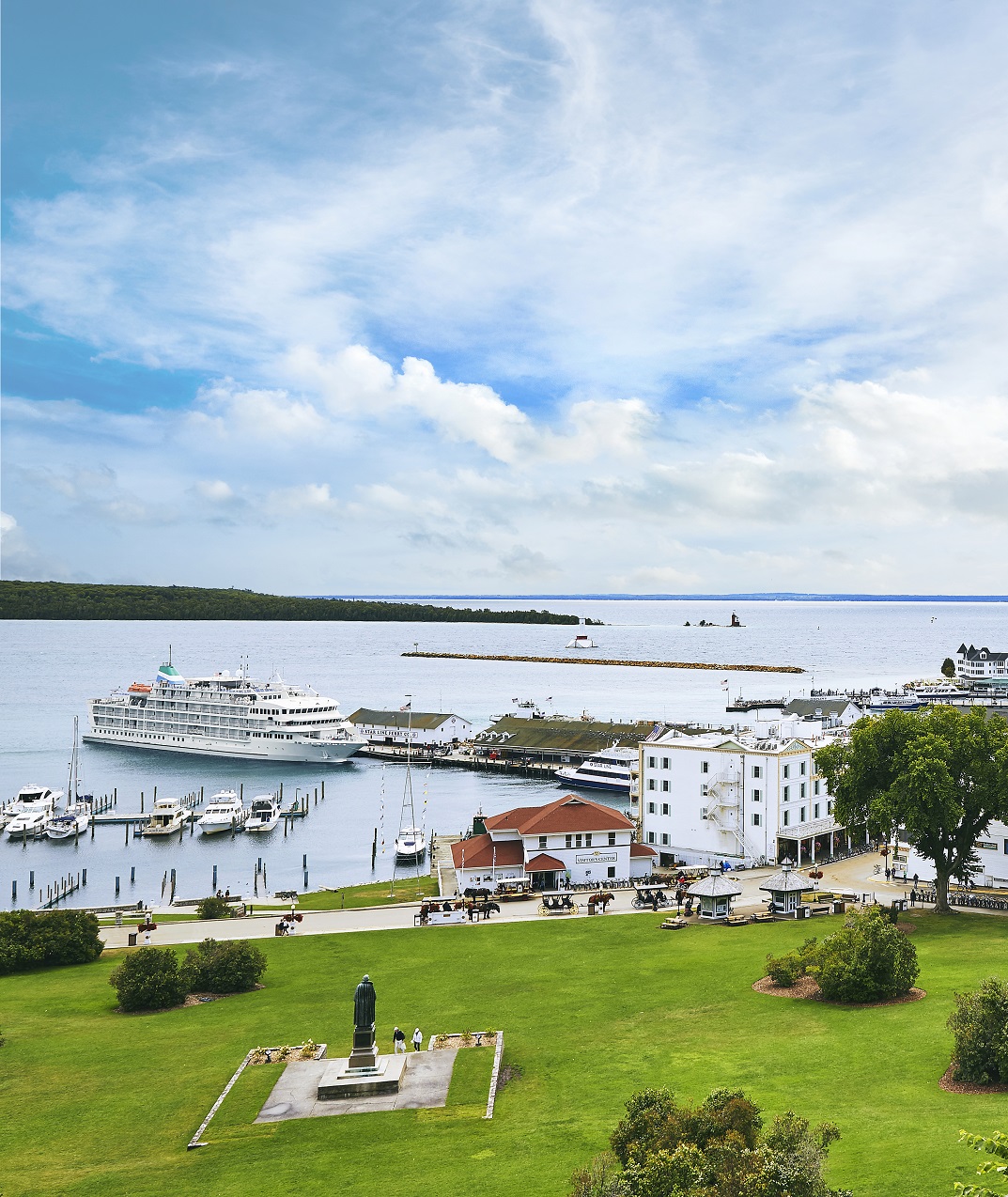

Image credits: Shutterstock, Unsplash
Mackinac Island rises where Lake Huron narrows between Michigan’s peninsulas, creating one of the most distinctive Lake Islands in the United States. Life here unfolds without cars, allowing the natural sounds of water and wind to shape the atmosphere. Bicycles trace the shoreline while forest paths lead inward toward limestone formations and elevated viewpoints.
Historic architecture blends naturally with the landscape, offering visual interest without overpowering the setting. Mackinac Island feels balanced, where human history and nature coexist without competing for attention. It remains an excellent example of how Lake Islands in the United States can preserve character while remaining welcoming.
Read about: Solo Travel Places in US
Isle Royale, Michigan
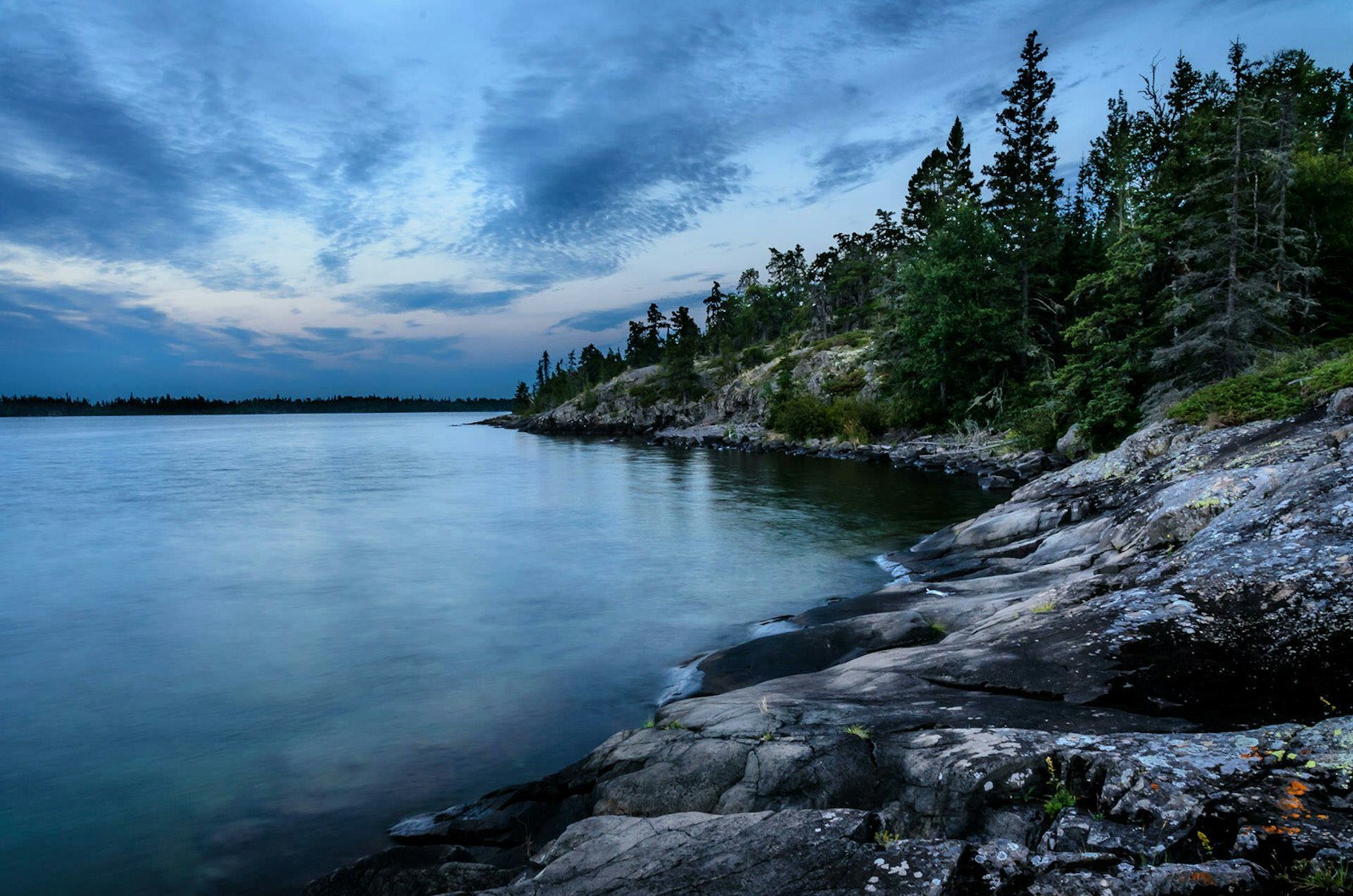

Image credits: National Park Service, Unsplash
Isle Royale sits deep within Lake Superior and represents the rawest side of Lake Islands in the United States. The island’s elongated shape and volcanic backbone create ridges that guide both wildlife and hikers. Dense forests surround inland lakes that reflect the sky with remarkable clarity.
The surrounding water feels immense, reinforcing the sense of distance from modern life. Weather shifts quickly, reminding visitors that this island operates on nature’s terms. Isle Royale highlights how Lake Islands in the United States can function as true wilderness rather than curated landscapes.
Apostle Islands, Wisconsin
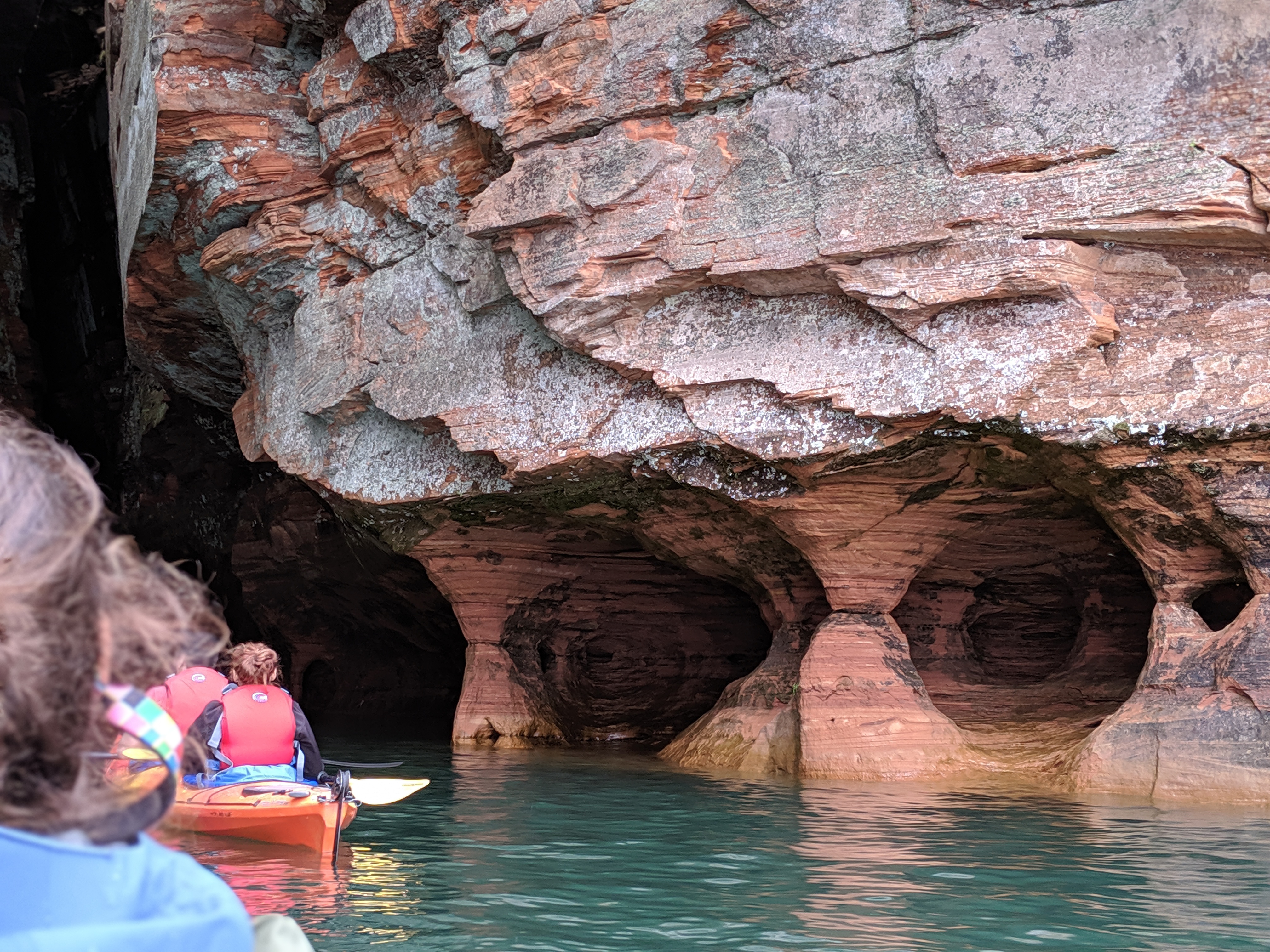

Image credits: Shutterstock, National Park Service
The Apostle Islands form a scattered chain shaped by Lake Superior’s restless energy. Among Lake Islands in the United States, few places show the interaction between water and stone so clearly. Sandstone cliffs rise directly from the lake, carved into arches and caves by waves and winter ice.
Kayaking offers the most immersive way to experience the islands, allowing travelers to move slowly between formations and forested shorelines. Seasonal changes transform the scenery, from clear summer reflections to frozen winter caves. These islands demonstrate how Lake Islands in the United States evolve throughout the year rather than remaining static.
Wild Horse Island, Montana

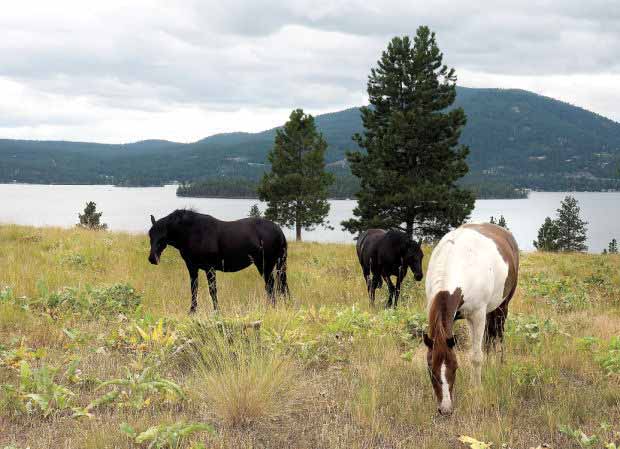
Image credits: Montana State Parks, Unsplash
Wild Horse Island rests within one of the largest freshwater lakes in the western United States. Unlike many Lake Islands in the United States, its identity is shaped more by wildlife than by human presence. Open grasslands give way to forested slopes, and rocky shores replace sandy beaches.
Wild horses and bighorn sheep roam freely, creating moments that feel almost cinematic. Elevated trails reveal sweeping views across Flathead Lake toward distant mountain ranges. Wild Horse Island shows how Lake Islands in the United States can feel expansive even when physically contained.
Fannette Island, California
Image credits: California State Parks, Shutterstock
Fannette Island is small yet instantly recognizable, rising steeply from Lake Tahoe’s famously clear water. Granite dominates the island’s surface, giving it a rugged appearance that contrasts with the surrounding blue tones of the lake.
A short climb leads to panoramic views across Emerald Bay, making the island a focal point for photographers and boaters alike. Though compact, it remains one of the most visually striking Lake Islands in the United States, proving that scale does not determine impact.
Antelope Island, Utah

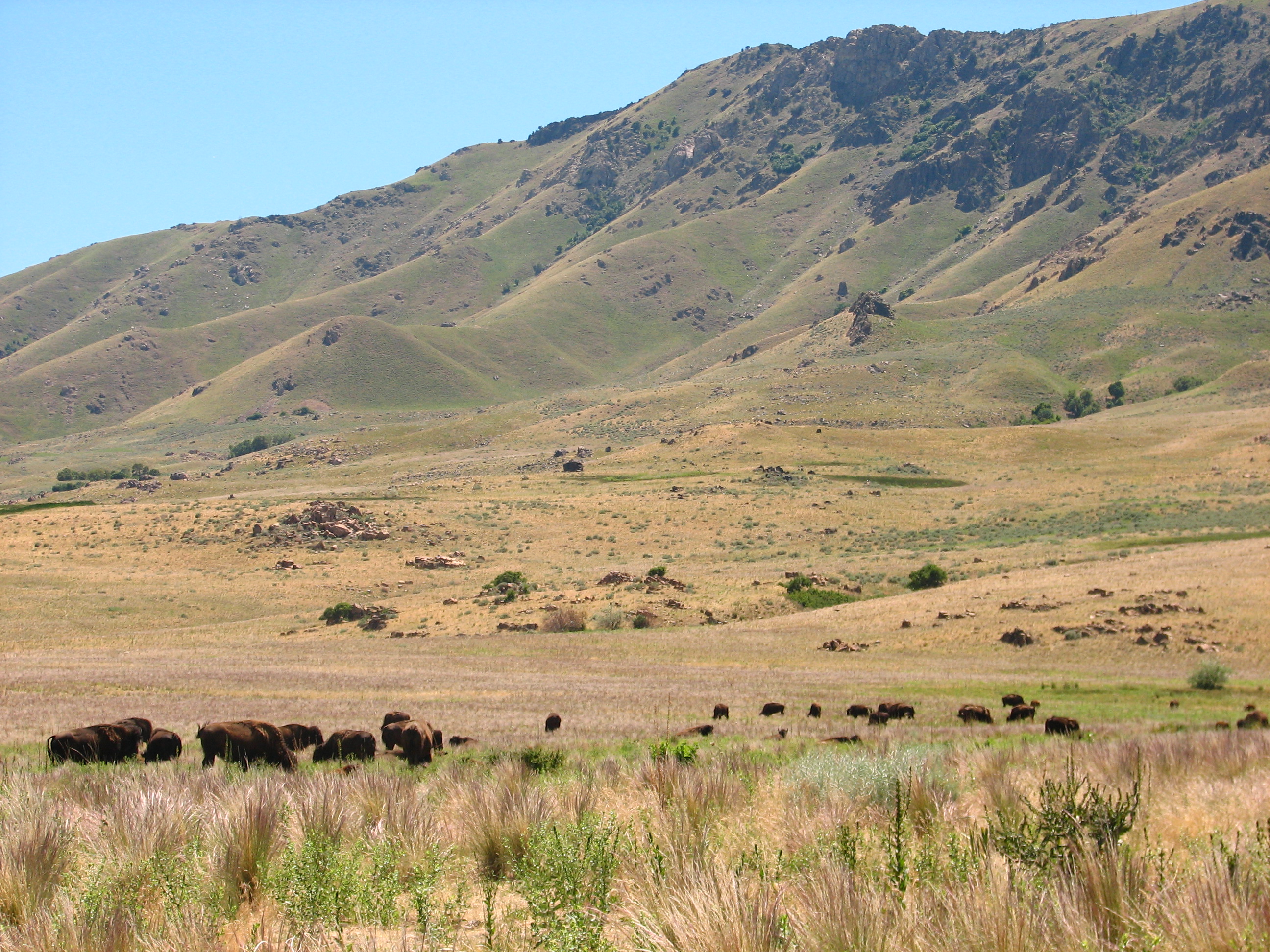
Image credits: Utah State Parks, Unsplash
Antelope Island offers a landscape unlike any other among Lake Islands in the United States. Surrounded by mineral-rich waters that shift in color, the island feels almost otherworldly. Rolling hills rise into rocky peaks, largely free of trees and rich in open views.
Wildlife defines much of the experience, with bison and pronghorn moving across grasslands that seem to stretch endlessly. The island’s connection to the mainland fluctuates with water levels, blurring traditional definitions of an island while enhancing its uniqueness within Lake Islands in the United States.
Grand Island, Michigan

Image credits: Hiawatha National Forest, Shutterstock
Grand Island lies just offshore from Munising yet feels worlds apart. Sheer sandstone cliffs dominate the southern shoreline, while the interior unfolds into forests, wetlands, and small inland lakes.
A loop road and trail system allow exploration without overwhelming navigation, making the island accessible while still wild. Among Lake Islands in the United States, Grand Island stands out for its layered geography and the way it combines dramatic edges with quiet interiors.
Lake George Islands, New York
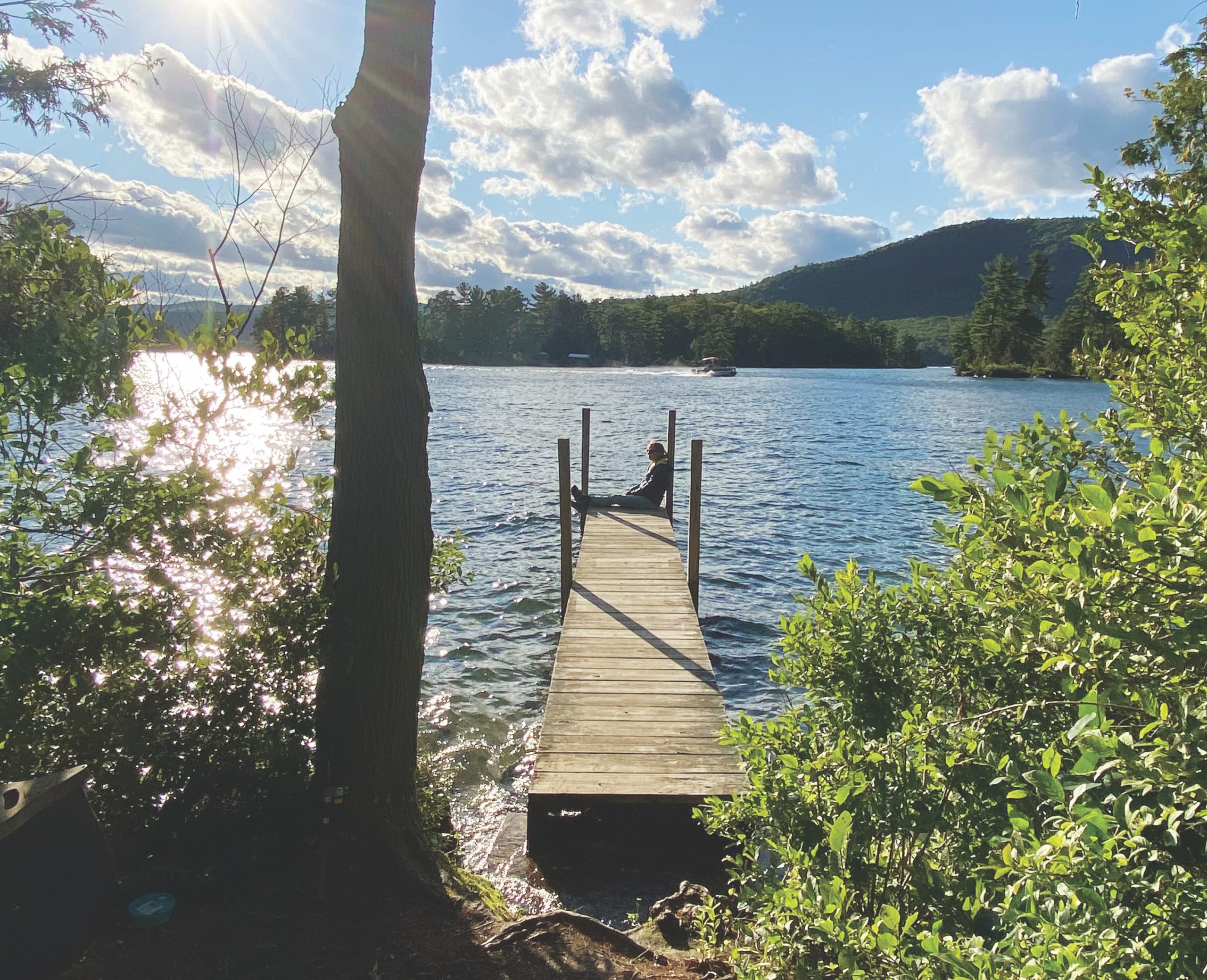
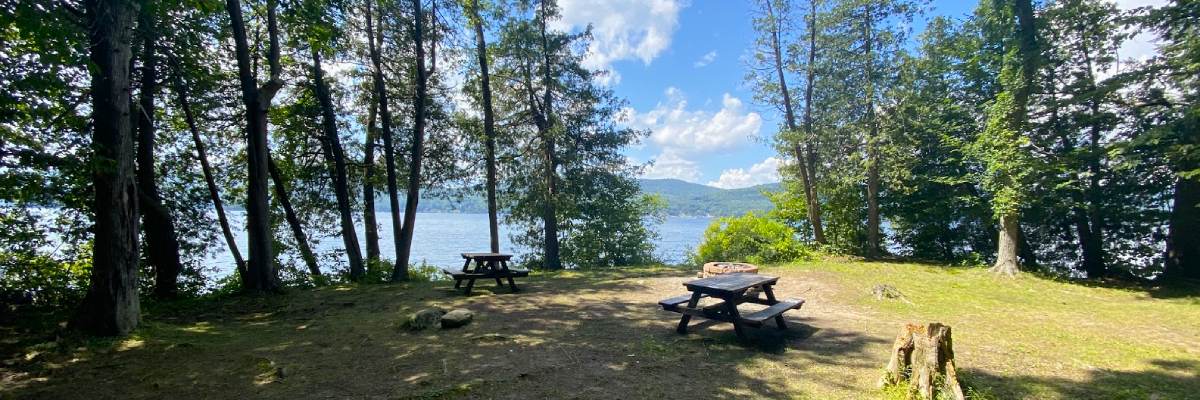
Image credits: New York State Parks, Unsplash
Lake George Islands form one of the densest collections of islands within a single lake. Forested shorelines, granite outcrops, and sheltered coves create varied scenery across relatively short distances.
Many islands remain undeveloped, preserving a sense of simplicity that defines classic Lake Islands in the United States. Historic remnants add subtle layers of storytelling without distracting from the natural setting. The islands invite exploration that feels flexible rather than demanding.
Champlain Islands, Vermont and New York
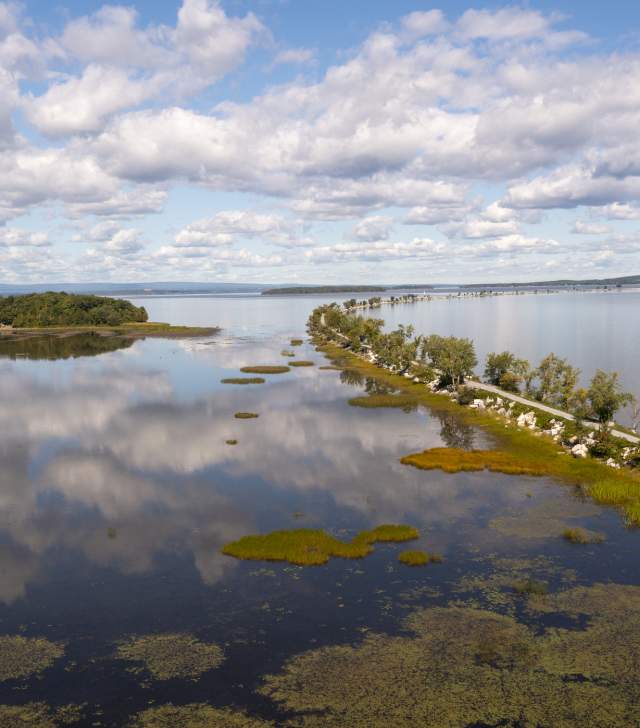
Image credits: Shutterstock, Unsplash
Champlain Islands reflect centuries of human settlement layered onto a naturally gentle landscape. Farmland, small villages, and historic structures coexist with open water views and distant mountain backdrops.
Unlike more rugged Lake Islands in the United States, these islands feel lived-in and calm. Roads wind past stone barns and shoreline fields, offering scenery shaped as much by history as by geology. Seasonal changes, especially autumn foliage, add depth to the experience.
South Bass Island, Ohio

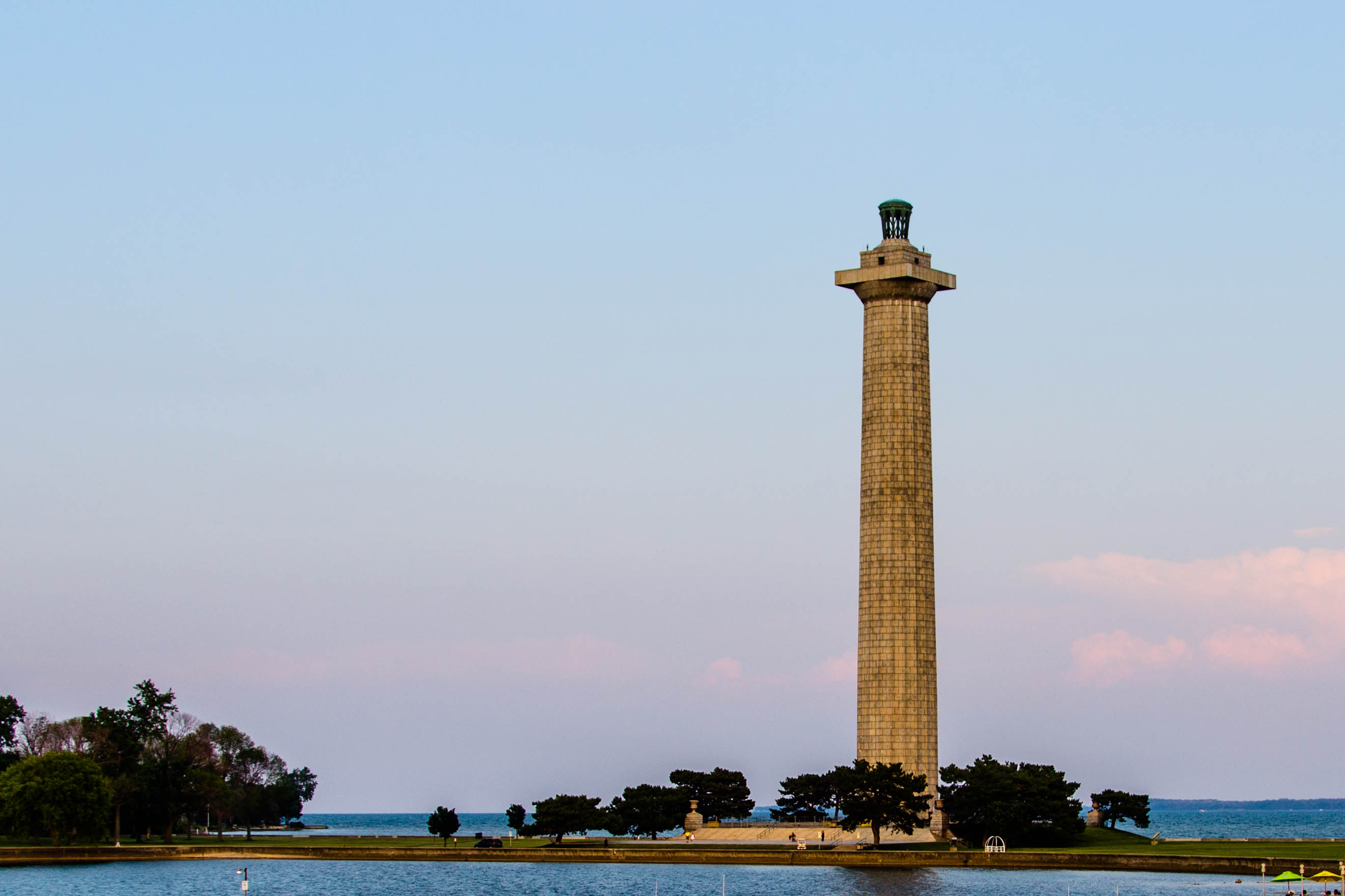
Image credits: Shutterstock, Ohio Tourism
South Bass Island occupies the warmer, shallower waters of Lake Erie. Vineyards, wooded areas, and pebble beaches create a relaxed environment that feels approachable and familiar.
The island’s harbor town provides structure, while nearby natural spaces allow moments of quiet. South Bass Island illustrates how Lake Islands in the United States can blend social energy with natural beauty without losing either.
Why Lake Islands Continue to Captivate
Lake Islands in the United States stand apart because they create natural pauses. Water slows movement, narrows focus, and enhances sensory awareness. These islands are not merely destinations but transitions between routine and reflection.
From glacial wilderness to historic communities, Lake Islands in the United States offer variety without excess. They remind travelers that beauty often exists away from highways and city centers, waiting quietly within freshwater borders.